
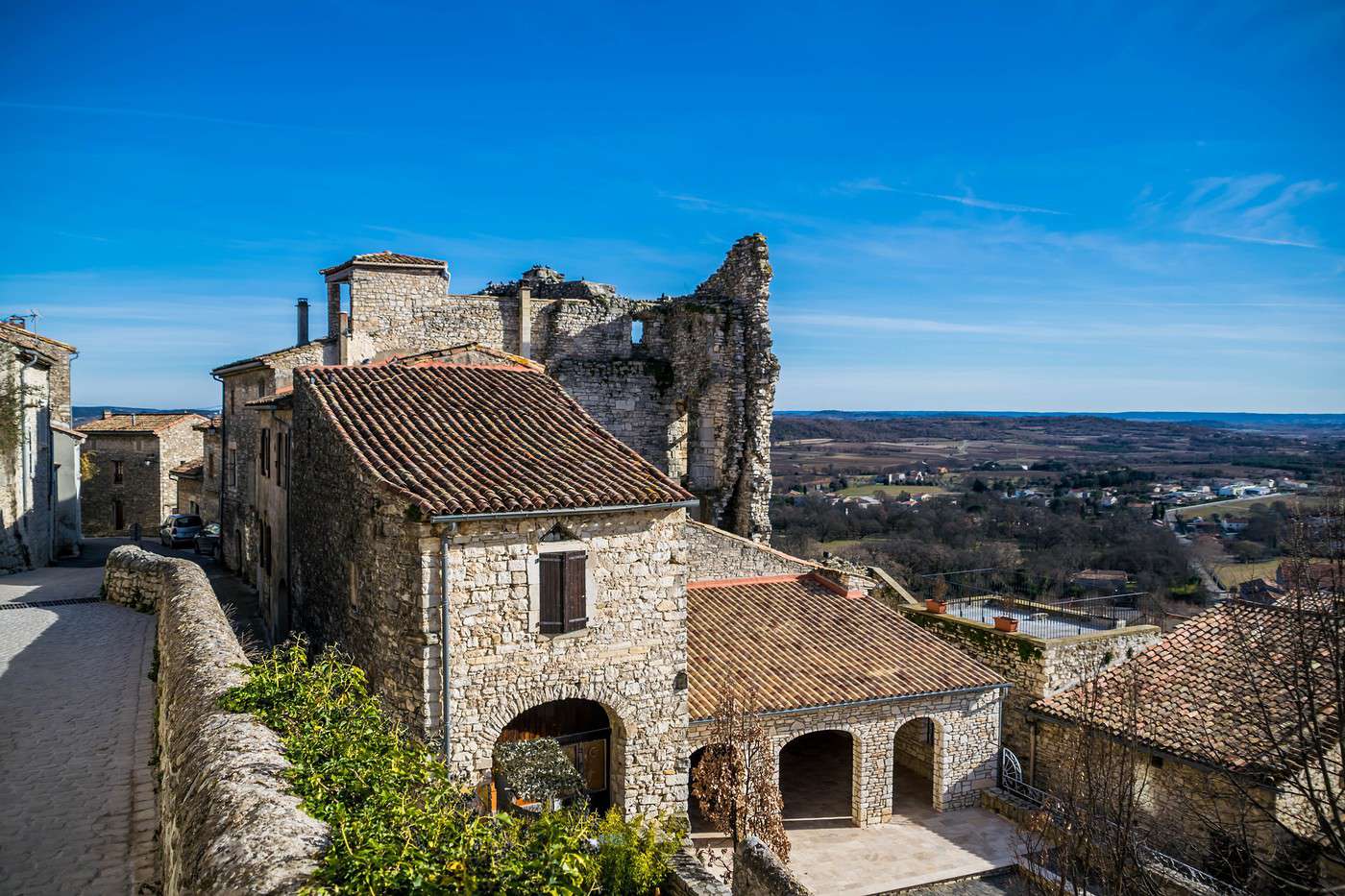
There is no better place to learn French than France. Every street sign, every conversation at the bakery, every evening around a dinner table becomes a lesson. But once you decide to go, a new question appears: where to learn French in France? From the beaches of the Riviera to the half-timbered streets of Normandy, from the wine estates around Bordeaux to the lakes of the Alps, each region has its own accent, its own pace and its own budget.
Take a moment to think about your goals before you book, because every region offers a unique experience. Do you want city life or a quiet village? An exam certificate or confident conversation? A big school with an international student community, or a private teacher who adapts every lesson to you? This guide will help you discover the best regions to learn the language, compare language schools and homestay immersion, and choose a host teacher who fits your level, your age and your budget.

Where is the Best Place in France to Learn French? Top Regions
International students often start with Paris, but France has many other cities and regions where you can learn French in excellent conditions, often for less money and with fewer English speakers around. Here is an overview of the main options.
Paris: The Iconic (but Expensive) Capital
Paris is the heart of French culture: museums, theaters, bookshops, cafés, and more history per square meter than almost any city in the world. If you want to learn French in Paris, you will find every type of course, from large language schools and university programs to private tutors.

The downsides are real, though. Paris is the most expensive city in France for accommodation and daily life, and in the most touristic neighborhoods many Parisians switch to English as soon as they hear an accent, which slows down your practice of spoken French. The solution is to live away from the tourist center. Françoise, who welcomes students in her apartment in the Batignolles, a lively residential neighborhood, takes her students to discover “a Paris without the tourists”, as one of her learners wrote, with hidden passages, local auctions and the back streets of Montmartre. Note that she recommends at least a B1 level, since you will speak French most of the time.
The South of France and French Riviera
The South of France is the dream of many learners: sunshine, markets, rosé on a terrace and a warm, relaxed atmosphere. It is also very popular for a summer camp or language camp for teenagers. The region offers a wide choice of cities:
- Nice and the French Riviera: sea, light and a cosmopolitan feel. Beautiful, but very touristic in summer and one of the more expensive areas.
- Montpellier: a young, dynamic university city near the Mediterranean, with a large student population and a lively old town. Anne-Elisabeth welcomes students in Montpellier, a short tram ride from downtown.
- Aix-en-Provence: elegant fountains, Cézanne’s landscapes and a large university. Calm, chic and very pleasant in spring and autumn.
- Marseille: France’s oldest major city, with a strong local accent, a huge port and an energy that is unlike any other place in the country.
- Toulouse: “La Ville Rose”, famous for its pink brick buildings, its aerospace industry and its many students.
- Avignon, Nîmes and the Languedoc: Roman monuments, vineyards and medieval villages. Our teachers Julie (Avignon), Gwen (between Nîmes and Uzès), Pierre (Languedoc) and Pascale (near Béziers) all welcome students in this region.

One tip: the southern accent is slower and more melodic than the Parisian one, which many learners find easier to understand at first.
Hidden Gems: Bordeaux, Lyon, and Normandy
If you want a more authentic experience, look beyond the classic postcards. These cities and regions offer a unique mix of history, local life and fewer tourists.
- Bordeaux: for wine lovers. Bordeaux is an elegant city on the Garonne river, with 18th-century architecture listed by UNESCO, wide quays and a growing student scene. The Bordeaux region is also an excellent base for vineyard excursions, from Saint-Émilion to the Médoc. If you love wine and history, Bordeaux is hard to beat, and life in Bordeaux is generally cheaper than in Paris.
- Lyon: for food lovers. Lyon is often called the gastronomic capital of France, with its bouchons, markets and traditions. Its old town is listed by UNESCO, and the Fête des Lumières lights up the city every December. Hélène and her family welcome students in Lyon, with daily outings and family dinners that one learner described as “a real treat”. Reviews of her stays describe a warm, family atmosphere.
- Rouen and Normandy: for history lovers. Learning French in Normandy means half-timbered houses, apple orchards and cheese farms. Rouen, the historic capital of the region, is famous for its Gothic cathedral painted by Monet and for the memory of Joan of Arc. Rouen is also close to Paris by train, which makes it easy to combine both. In rural Normandy, Camille offers a linguistic and culinary immersion around cider, Calvados and Camembert, just two hours from Paris by train.
- Lille: for the warmth of its people. The North is famous for its super friendly, welcoming inhabitants, its Flemish architecture and its huge flea market in September.
- Annecy: for nature lovers. Annecy, often called the “Venice of the Alps”, sits on a crystal-clear lake surrounded by mountains. Annecy is small, beautiful and very popular in summer, and in winter Annecy is close to the ski resorts. Near Grenoble, Yasmina offers a very intensive week of French with excursions in the Alps: one of her learners spent a full day in Talloires, on the shores of Lake Annecy.
- Brittany: for the coast and a strong regional identity. Florence, Edwige and Céline all welcome students in Brittany, between the ocean, the forests and the medieval villages.


Other regions also deserve a look: the Loire Valley and its castles, the volcanoes of Auvergne (where Soline welcomes students in Volvic), the Beaujolais countryside, the Île de Ré on the Atlantic coast, or a 16th-century château near Poitiers. You can see all of them on the map when you explore our immersion programs.
French Language Schools vs. Homestay Immersion Programs
Once you have chosen a region, you need to choose a format. There are two main families of programs.
French language schools, such as the Alliance Française (the Alliance Française de Paris school was founded in 1883) or the many private schools in Montpellier, Nice or Bordeaux, offer structured group classes, placement tests and solid exam preparation, especially for the DELF and DALF diplomas. They are a good option for a full semester or if you need an official certificate. The limits: classes of several students, a fixed calendar, limited speaking time for each student, and after school you often go back to your residence or host family in the afternoon and switch to English with your classmates. For a long stay of a month or more, a school can still be a lot of help.
French immersion programs with a host teacher work differently. You live with or near a qualified teacher, in their home or in an independent apartment next to it. Mornings are dedicated to intensive one-on-one lessons, afternoons to excursions, markets and conversations with local people. While traditional schools like the Alliance Française are excellent for grammar, living with a host teacher provides unmatched conversational practice. One learner who had already tried two other immersion schools described his week with Edwige in Brittany as his “best and most productive experience”.
| Criteria | Language school | Homestay with a host teacher |
|---|---|---|
| Teaching format | Group classes | One-on-one, tailored lessons |
| Speaking time | Limited, shared with the class | Most of the day |
| Exam preparation | Strong (DELF, DALF) | Possible on request |
| Start dates | Fixed calendar | Flexible |
| Cultural activities | Optional, in groups | Included, guided by your teacher |
| Best for | Long stays, certificates | Fast progress in conversation |

The 80/20 Rule: Why Immersion Works Best
What is the 80/20 rule in French? It is the idea that around 20% of the vocabulary covers about 80% of daily conversations. In a homestay, this is exactly what you practice: the words and phrases you need to order at the café, chat with neighbors, talk about the news or tell a story at dinner. Instead of studying long lists from a textbook, you use the core of the language again and again in real conversation, until it becomes automatic. That repeated practice is why so many learners report more progress in one week of immersion than in months of classes.
What Age Groups Can Learn French?
Language stays are not only for university students. You can learn French at any age, and France offers programs for every stage of life:
- French courses for kids: several of our teachers welcome children accompanied by a parent, which makes an immersion a wonderful family experience.
- Teenagers: some teachers, such as Hélène in Lyon, Soline in Auvergne or Céline in Brittany, also welcome solo teenagers preparing exams.
- French courses for adults: the large majority of our learners are adults, from young professionals to retirees.
- Seniors: immersion is especially well suited to learners over 60, who appreciate the personal pace and the comfort of a homestay. Pierre, who teaches in Languedoc, says his youngest student was 5 and his eldest was 92.
The message is simple: learn French for all ages is not a slogan, it is the reality of immersion. If you are over 60 and hesitating, read our answer to the question can a 60-year-old learn French?
What is the Cost of Learning French in France?
How much does it cost to learn French in France? The cost of learning French depends on two things: the region and the format.
- The region: Paris and the Riviera are the most expensive places to live. Cities like Brest, Strasbourg, Rouen, Lille or Montpellier are often more affordable, and the countryside even more so.
- The format: tuition for French courses in a language school is usually charged per week, with accommodation (host family, student residence or studio) and meals billed separately. An immersion with a host teacher is an all-in-one package.
On Immersion French, programs are priced per week (6 nights, 7 days) and currently range from about €1,100 for 15 hours of lessons without accommodation to €3,900 for an intensive week in a château. Most programs cost between €2,000 and €3,000 and include 25 to 40 hours of French, accommodation in or next to the teacher’s home, several meals and guided excursions.
A few tips to find affordable French courses:
- Come with a friend or partner. Most teachers accept a second student for a much lower price (from about €600 to €1,250 per extra student), and a non-learning partner for less.
- Travel off-season. Flights and extra nights are cheaper in autumn and spring. Our guide to the best time of year for French immersion explains why.
- Choose a smaller city or the countryside. You will spend less and hear more French. Shopping at the local market rather than the supermarket is also a lot more fun, and a great French lesson.
- Compare with a school. A month in a language school can look cheaper on paper, but add accommodation, meals and activities before you compare. Some learners combine both: a month of school followed by a week of immersion to discover how much they can really use.
- Prepare at home. Online courses, an app such as Rosetta Stone or a local language exchange will help you arrive with a better level and make the most of each hour with your teacher.
Cultural Tips: How to Not Be Rude in France
Choosing the right region also means learning the local codes. French people are friendly and welcoming, but they follow a few rules of politeness that visitors often miss. Here is how to not be rude in France:
- Always say “Bonjour” first. When you enter a shop, a bakery or a doctor’s office, greet the person before anything else. Asking a question without a “Bonjour, madame” or “Bonjour, monsieur” is seen as impolite.
- Use “vous” with strangers. The formal “vous” is the default with people you don’t know, older people and shopkeepers. Wait until someone suggests using “tu”.
- Respect restaurant rhythm. Meals take time. Your waiter will not bring the bill until you ask for it (“L’addition, s’il vous plaît”), because rushing you would be rude.
- La bise. Friends greet each other with kisses on the cheeks, and the number of kisses changes from one region to another. Your host will show you.
- Keep your voice down in public transport and restaurants, and say “Bon appétit” before starting a meal together.

A host family is the best guide to these codes. You learn them naturally, by watching, asking and sharing daily life, and you avoid the small mistakes that can make an interaction feel cold.
How to Choose the Right Host Teacher
In immersion, the teacher matters as much as the city. Before you book, check:
- The levels they teach, and whether they welcome beginners.
- The number of hours per week and the balance between lessons and excursions.
- The type of accommodation: a room in the family home, an independent apartment or a studio nearby.
- The meals included and any dietary needs.
- The reviews of past students, which describe the teaching style and the atmosphere. Each teacher offers a unique program, so read a lot of reviews before you decide.
Then contact the teacher through our secure messaging system to talk about your goals. Many of them offer an online call before the stay, so you can get to know each other first.
Conclusion: Start Your French Journey Today
Paris, Lyon, Bordeaux, Rouen, Annecy, the South or Brittany: there is no single best place to learn French in France, only the place that fits your goals, your budget and your personality. What makes the biggest difference is the person who teaches you and the time you spend speaking French every day.
Ready to choose? Browse the program list, read the profiles and reviews, and contact the teacher who matches your plans. Popular dates fill up fast, so book early before registration is closed for the season you want. To learn more about the method, read our guide to the best French immersion programs for adults in France.